

What Is Christian Streetwear? Faith Meets Street Style

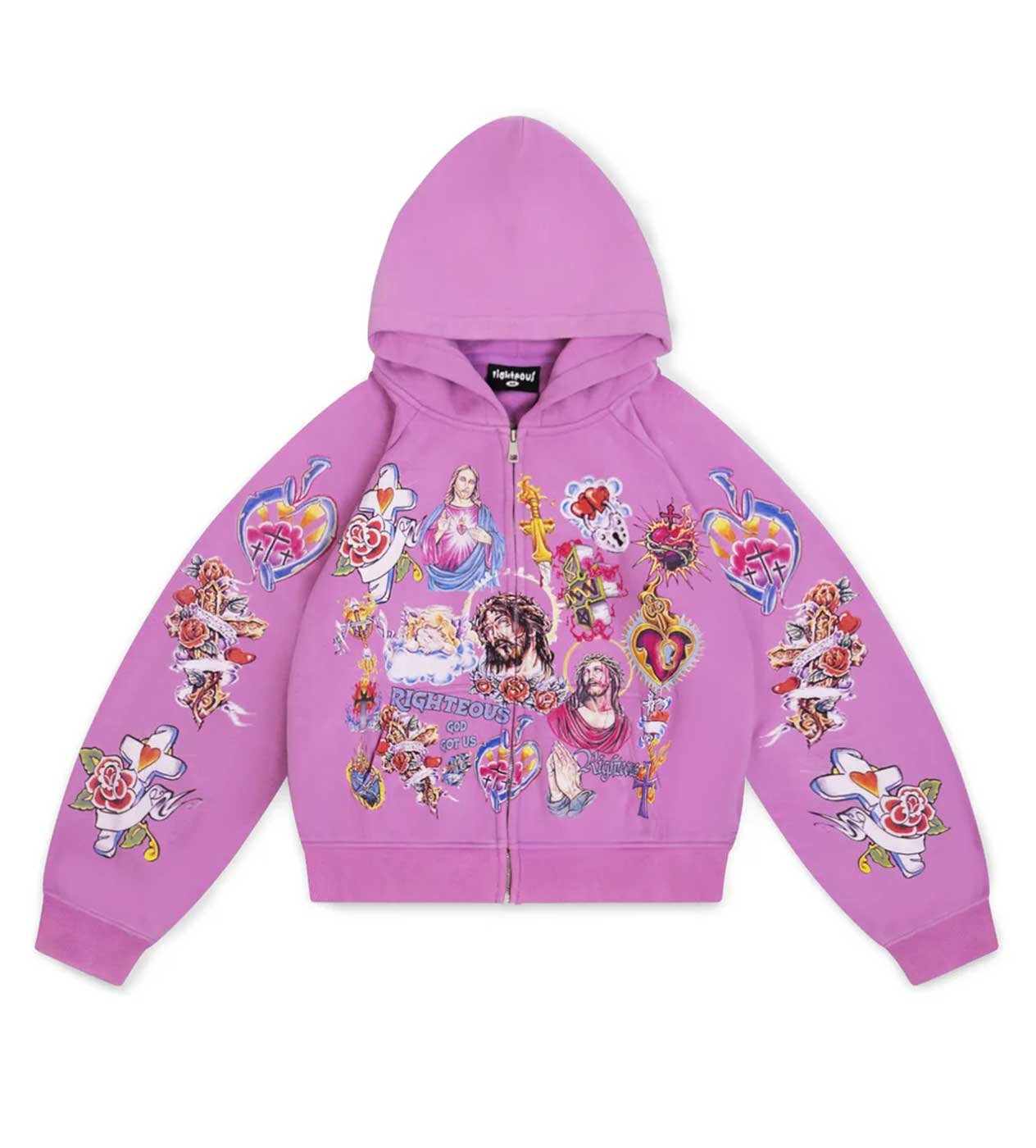
You are standing in a coffee queue when you realise you have just read a stranger’s hoodie. Not glanced at it — read it. A verse number across the back, a saint’s face down the sleeve, a phrase you recognise even if you have never set foot in the church it came from. That half-second of reading, before you even decide whether you like the jacket, is the whole category this article is about.
Christian streetwear is faith worn as fashion, built to the same standard as any other streetwear: heavyweight fleece, oversized cuts, limited drops, graphics that are designed rather than decorated. The faith is not a logo added to a finished garment. It is the design itself.
First, What Counts as Streetwear at All?
Streetwear began in the surf and skate scenes of California in the 1980s and merged with hip-hop culture in the 1990s. Its rules were set early and have barely changed: relaxed silhouettes, bold graphics, limited-run releases, and identity through what you wear rather than what a label tells you to wear. A brand earns its place by having a recognisable visual language — you know a piece before you read its tag.
Christian streetwear adopts every one of those rules and layers a theological purpose on top. That layering is the entire definition. Remove the streetwear rules and you have church merch. Remove the faith and you have ordinary streetwear. The category only exists where both are present at full strength.
Christian Streetwear vs Church Merch: The Real Difference
Most people can feel this difference before they can name it, and it comes down to design intent, not devotion. Church merch is designed to represent a specific congregation or event: a name, a date, a friendly slogan, printed as cheaply as the budget allows on a standard tee. It is a souvenir that happens to be wearable.
Christian streetwear is designed the other way round. The garment comes first — the cut, the weight, the print quality — and the message is engineered into it the way any streetwear brand engineers its signature graphic. A chest-print verse in block lettering, an embroidered reference on a cuff, a full all-over artwork of angels and saints: these are design decisions, made by people who expect the piece to be judged next to mainstream labels, not excused because its heart is in the right place.
This is why the category’s rise is a fashion story before it is a faith story. The buyers changed the standard. A decade ago, a faith shirt only had to make a point at a youth event. Today the same buyer wants a piece that works at a coffee shop, a small group and a Friday dinner without looking like a billboard — and will compare its fabric and fit against everything else in their wardrobe.
The Three Things That Define the Category
Strip away the branding and almost every serious piece in this lane shares three traits. They make a useful test for anything claiming the label.
1. The message is the design, not an accessory to it
In ordinary streetwear, a small logo carries the identity and the rest of the garment is quiet. In Christian streetwear, the message does the visual work: scripture references, crosses, sacred-heart imagery, saint portraiture and short gospel phrases are placed where a mainstream brand would put its loudest graphic. If you covered the brand name, the piece would still say something. If it would say nothing, it is probably merch with better marketing.
2. The garment meets streetwear standards, or it fails
Oversized or boxy fits, drop shoulders, heavyweight fleece, prints that survive washing — the category is judged on construction, not intention. This is the test most newcomers fail: a beautiful verse on a thin, shapeless blank is not Christian streetwear, it is a slogan tee. Weight, drape and print stability are not luxury extras here; they are what separate a piece you wear weekly from one you wear once to prove a point.
3. It is made to start a conversation, not end one
A reference worn openly invites a question — “what does 3:16 mean?” — in a way a plain hoodie never does. The best pieces in this lane understand that dynamic and design for it: they use references, numbers and symbols that reward a second look rather than spelling everything out. That is a design choice with a long history behind it, and it leads to the category’s most interesting trick.
The Reference, Not the Paragraph: Why Numbers Work on Clothing
Here is the insight most guides miss. The most effective faith graphics on clothing are rarely full sentences. They are references — a number like 3:16, a short phrase, a single image — and that restraint is deliberate, not lazy.
A paragraph on a chest has to be read; a reference has to be recognised. Recognition is faster, it works from across a room, and it turns the garment into a question instead of a lecture. The wearer is not preaching at strangers — they are wearing something that makes a curious stranger ask, and that question is the point. It is also why this lane borrows so heavily from tattoo art: tattoo flash has always communicated identity in symbols and shorthand, designed to be read at a glance and decoded slowly. Streetwear’s graphic language and tattoo’s visual language were built for the same job.
None of this is new, either. Fashion has borrowed Christian imagery for centuries — from clerical garments that shaped medieval dress to the Metropolitan Museum’s 2018 “Heavenly Bodies” exhibition, which showed just how deeply Catholic imagination runs through high fashion. What changed recently is the direction of travel: instead of luxury houses borrowing sacred imagery as decoration, independent faith-led labels are building whole brands where the sacred imagery is the point, on silhouettes their audience already wears.
Two Styles Inside One Category
Once you know what to look for, two distinct styles emerge, and knowing which one you are looking at explains most arguments about the category.
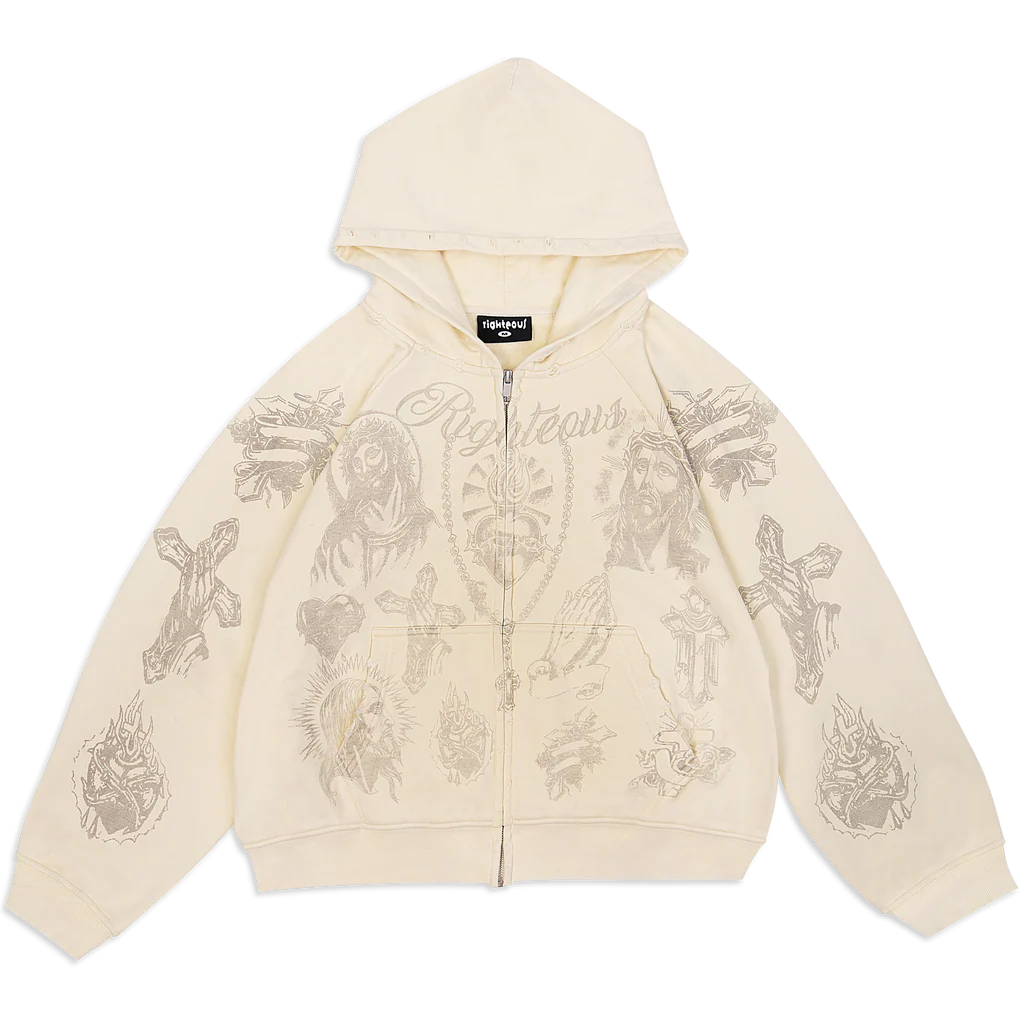
The bold style goes all in: large designs, clearly visible verses or symbols, all-over artwork that covers the body and sleeves. It is unapologetic, and it is the style that photographs best — which is why it dominates social feeds. The quiet style does the opposite: monochrome palettes, small embroidered references, minimal typography, a verse tucked where only the wearer notices it. Same belief, same streetwear construction, completely different volume.
Neither is more authentic than the other. The honest question is which one fits how you actually dress. A bold all-over print demands a quiet rest of the outfit — plain bottoms, simple shoes, nothing else competing. A quiet embroidered piece can carry a louder outfit around it. That single rule — one statement piece per outfit — is the difference between an outfit that looks intentional and one that looks like a costume, and it applies far beyond faith fashion.
How to Judge a Piece Before You Buy It: The 3-Test Check
Save this one. Before you pay for anything calling itself Christian streetwear, run three tests:
- The cover-the-logo test: hide the brand name. Does the piece still say something, through its artwork alone? If yes, the design is doing real work.
- The wardrobe test: would you wear it if nobody knew what the reference meant? If the cut, weight and print only work as a statement, you will stop wearing it the week the statement feels old.
- The wash test (in advance): check the fabric weight and print method on the listing, and read the care guidance. A heavyweight graphic piece that cracks after three washes was never streetwear — it was a poster you could wear.
A piece that passes all three is worth its price. A piece that passes only the first is merch. A piece that passes only the second is just a hoodie.
One Label That Shows the Category Working: Ours
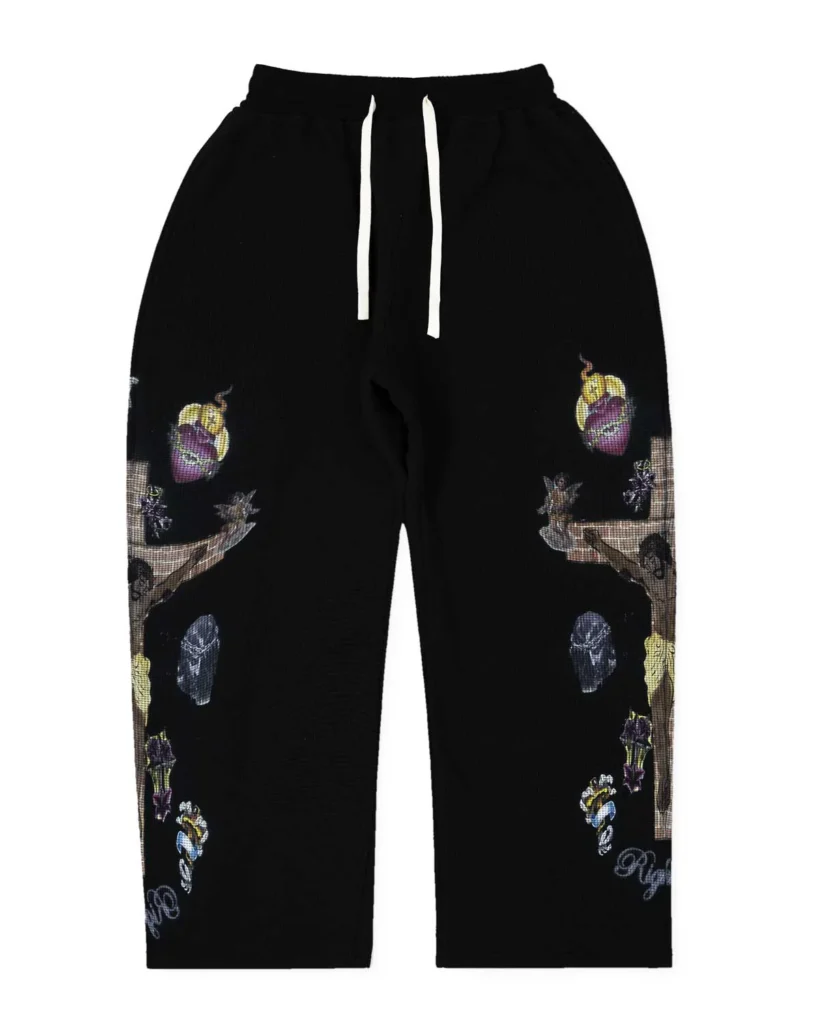
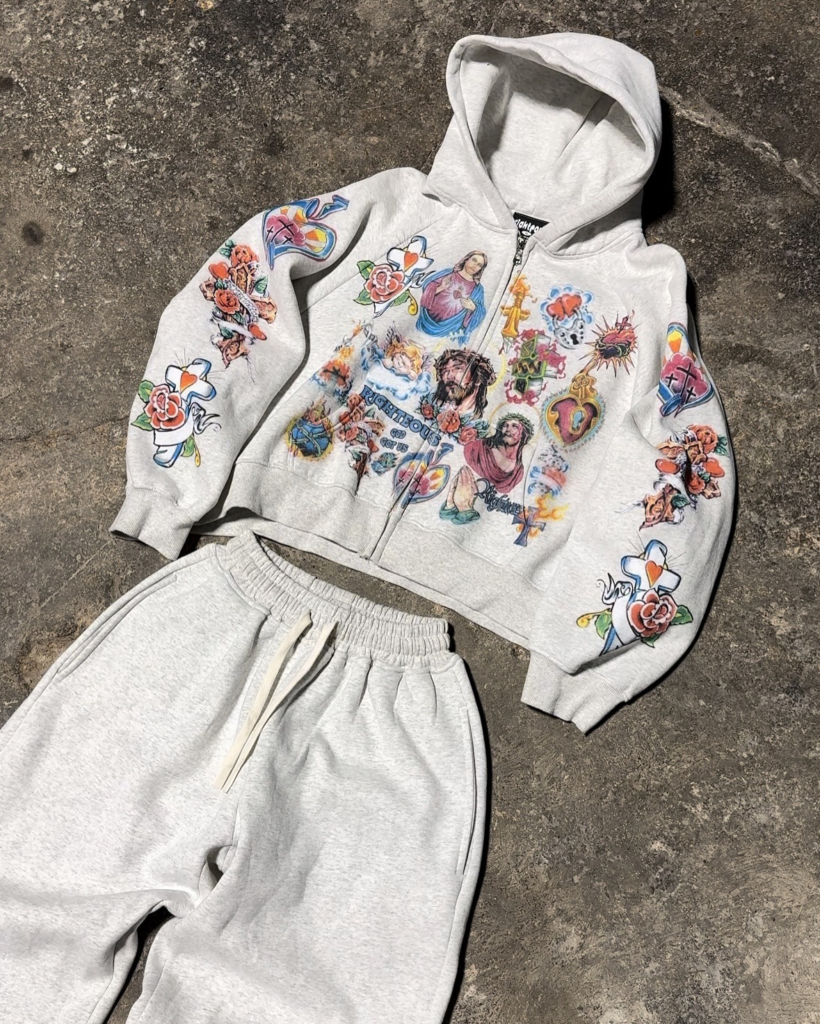
So what does all of this look like when a brand commits to it fully? We can only speak for our own work. At We Are Righteous, our signature is the Risen King zip-up — a heavyweight hoodie wrapped edge to edge in tattoo-style saint and angel artwork, released in wide colourway runs with matching sweatpants. It is the bold style at full volume: the artwork is not placed on the garment, it is the garment, and our collections are named for the ideas behind them — Risen King, Ultimate Sacrifice, Crown of Light, Sacred Stone, 3:16.
What we hold ourselves to is exactly the test above. Cover our name and the artwork still speaks. The cut is deliberately oversized and boxy, the fleece heavyweight, the print built to hold a full-coverage design. And the reference trick runs through our whole range: a number instead of a paragraph, an image instead of an explanation. You can see the current range in the Righteous Hoodies collection, and the full catalogue in the shop on werighteous.org.
But the category is bigger than any one label, and that is the point of this guide. Christian streetwear is not a brand, a trend cycle, or a church gift shop with better fonts. It is a design discipline: take the faith seriously enough to make it the artwork, and take the clothing seriously enough that the artwork survives contact with real life. When both halves hold, a stranger in a coffee queue stops — and reads. If you want to see how we apply that discipline, our homepage is where our current range lives.
Frequently Asked Questions
Is Christian streetwear only for Christians?
No. Like any graphic-led fashion, it is worn by people drawn to the artwork, the fit, or the cultural language, as well as by believers. The designs carry a meaning whether or not the wearer shares it — the same way band tees are worn by people who discovered the band through the shirt.
How is Christian streetwear different from regular streetwear?
Only in its message. The construction — oversized fits, heavyweight fabrics, limited drops, bold graphics — is shared. The difference is design intent: in Christian streetwear the faith message is the graphic itself, not a logo or a slogan added afterwards.
What should I look for when buying my first piece?
Run the 3-test check above: cover the logo, test it against your real wardrobe, and check weight and print quality before ordering. Start with one statement piece and keep the rest of the outfit quiet.
Where can I read more about the brands in this lane?
Start with our brand guide: What Is We Are Righteous Clothing? — and for fit and fabric detail, the righteousness hoodie guide already on this magazine.
Next in this series: how to style an oversized hoodie without looking baggy.

2 thoughts on “What Is Christian Streetwear? Faith Meets Street Style”