
Tattoo Style Christian Hoodie: The Art, the Meaning, and How to Wear It

The ink was on skin long before it was ever on cotton. Walk into any old tattoo parlour and the walls tell you the whole story before anyone picks up a machine — sheets of bold, black-outlined drawings pinned up in rows, each one made to be chosen in seconds and worn for life. That wall is called a flash sheet, and it is the reason a tattoo style christian hoodie works at all.
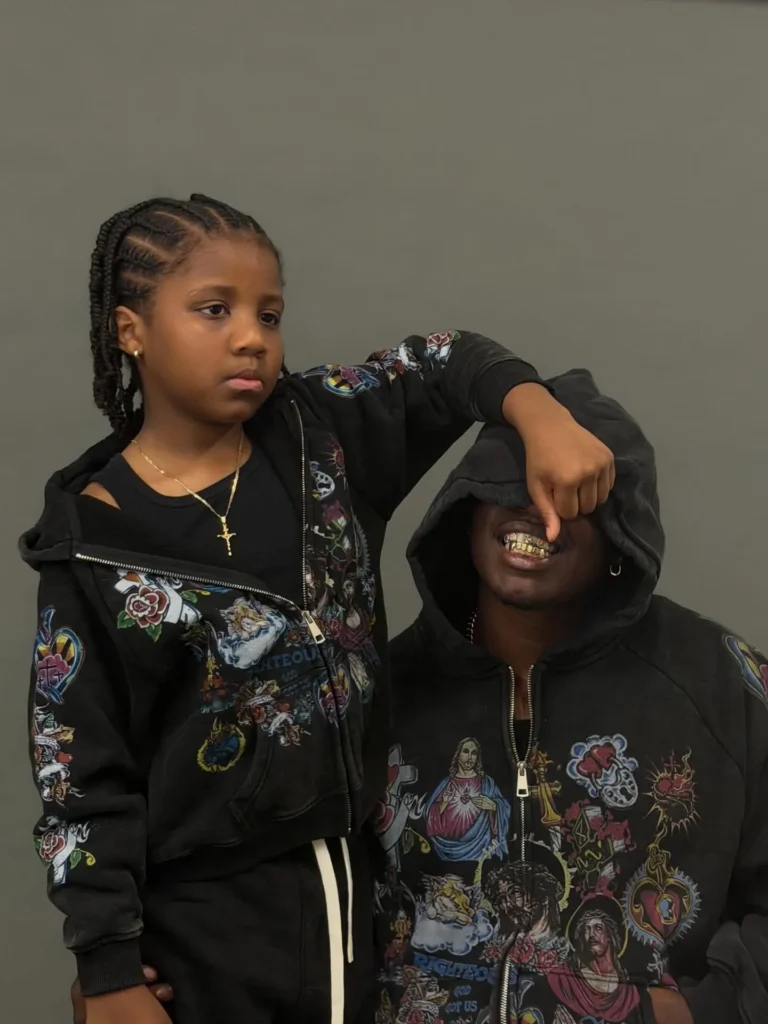
We did not invent this language. We borrowed it — the way streetwear has always borrowed it — and then we gave it something to say. This is the story of tattoo art on a hoodie, why it fits faith clothing better than almost any other style, and how to wear it without looking like a costume. It is also the story of our own Tatted Believer family, the quietest entry point in our range: four zip-ups and three sweatpants, one drawing hand, seven pieces that work as a single wardrobe.
What “tattoo style” actually means on a hoodie
A tattoo-style graphic is not just any drawing with thick lines. It comes from a specific tradition with specific rules, and those rules are the reason it survives the jump from skin to fabric. A flash sheet was a parlour’s menu: designs drawn to be picked quickly, inked in one sitting, and read from across the room. So flash art learned three disciplines — bold outlines that hold their shape, a short palette (usually two or three colours plus black), and one clear image per design instead of a crowded scene.
Here is the part most guides miss, and it is the first thing worth knowing: flash was designed to be read at arm’s length, in about three seconds. That is almost exactly the distance at which someone reads the graphic on your hoodie. A painting needs a gallery wall and a minute of your time; a flash design needs a glance. That is why tattoo art translates to clothing better than almost any other art form — it was already built for the distance, the speed, and the single bold read that streetwear demands. Call it the three-second rule: if a tattoo-style graphic does not read in three seconds at three feet, it is not flash — it is decoration pretending to be flash.
The style went mainstream on clothing in the 2000s, when tattoo artist Don Ed Hardy’s drawings were licensed onto apparel and suddenly every high street carried tattoo graphics. The boom taught the scene a lesson too: when the art gets buried under rhinestones and noise, it stops being tattoo style and starts being a souvenir. The pieces that lasted from that era are the restrained ones — one image, clean lines, room to breathe. We kept that lesson. Our Tatted Believer pieces carry one tattoo-inspired graphic language across the whole family, and nothing else competes with it.
Why tattoo art and faith share the same wall
There is an honest question underneath this style, and it deserves an honest answer: is tattoo imagery at home on Christian clothing? The short answer is that the imagery got there first. Religious art was tattoo flash before tattoo parlours existed. Coptic Christians have tattooed small crosses on their wrists for centuries. Pilgrims to Jerusalem have carried tattooed marks of the journey home for just as long. Angels, doves, thorned crowns, scriptural banners — these images lived on skin, on church walls, and in illuminated manuscripts centuries before anyone called them “tattoo style.”
So the direction of the borrowing runs the other way round from what people assume. Tattoo flash did not lend its images to faith; it borrowed them from faith, simplified them into bold lines so they would survive on skin, and handed them back. When you wear a tattoo-style cross or angel on a hoodie, you are not mixing two worlds that never met. You are wearing the point where they have always overlapped.
That is why the style fits our range so naturally, and why we treat it as a language rather than a look. The Tatted Believer family does not shout. It is the piece you reach for when you want the faith to be visible without a sermon on the chest — a quieter entry point, and the one people keep coming back to precisely because it does not try so hard.
The Flash Check: how to spot a good tattoo-style hoodie
Before you buy any tattoo-style piece — ours or anyone’s — run it through four checks. Save this; it works on every brand, every price, every drop.
- 1. Line weight. The outlines should be bold enough to survive fifty washes. Thin, fussy linework looks detailed on a product photo and turns to a grey smudge by spring. If the lines look like they were drawn with a marker, not a pencil, the print has a chance.
- 2. Palette discipline. Two or three colours, plus black. Flash sheets were limited because ink was limited, and the limit is the style. A tattoo-style hoodie with eight colours is not richer — it is noisier, and the eye has nowhere to land.
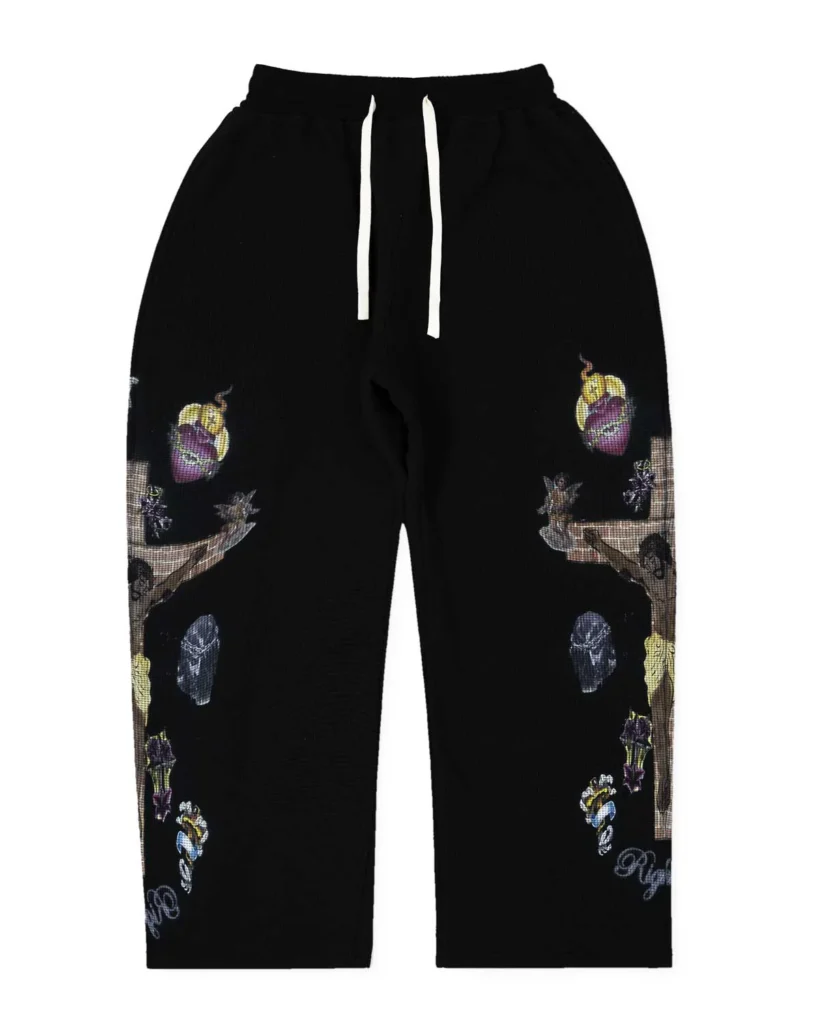
- 3. Placement with intent. One graphic, placed where it means something — chest, back, or down the leg. Artwork scattered on every panel is not a design, it is panic. The sweatpants in our family carry their tattoo-inspired graphics down the legs for exactly this reason: one line of art, one direction, nothing competing with it.
- 4. The wash. Tattoo style looks wrong on stiff, brand-new fabric. It wants a lived-in surface — an acid wash, a light distressing, a finish that makes the piece look like it already has a history. Our Tatted Believer zip-ups and sweatpants are acid-washed and lightly distressed for this reason, so each one comes out slightly its own. If a “vintage tattoo” hoodie arrives looking like it just left the printer, the story is missing.
One more check, and it is the simplest: take the words off. Would you still want the piece for the drawing alone? If the answer is no, the art was never the point — the slogan was. The best tattoo-style pieces pass that test easily, because the drawing was the whole idea from the start.
The Tatted Believer family: seven pieces, one wardrobe
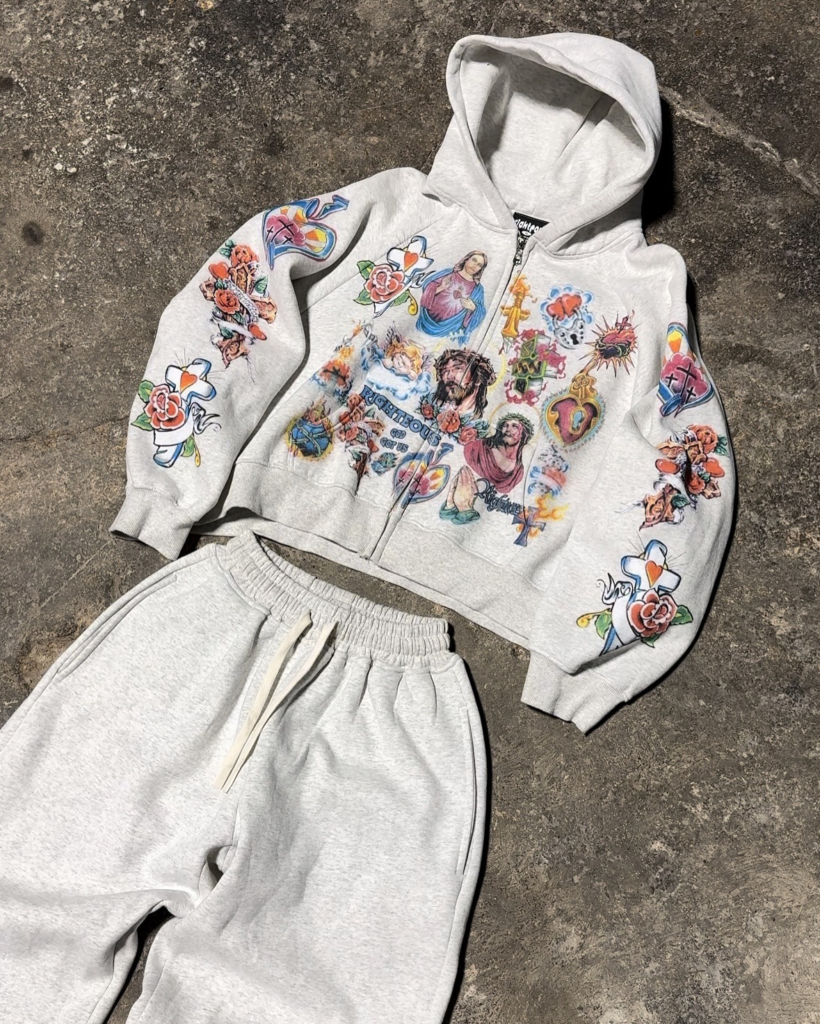
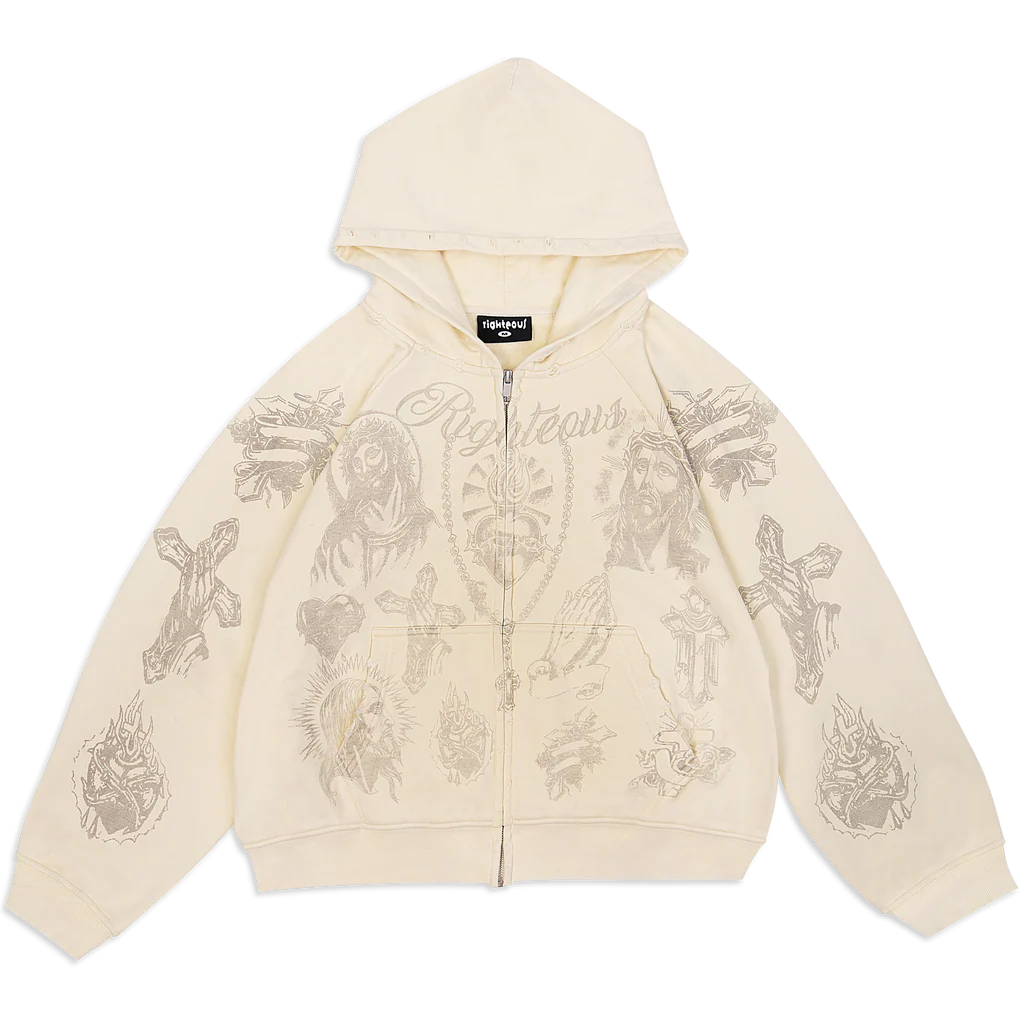
Our family is built as a set, not a shelf of unrelated pieces. Four zip-ups and three sweatpants, all in the same tattoo-inspired language, all in the same heavyweight French Terry — our listing for the cream zip-up puts it at 530g, 100% French Terry cotton, with an acid-wash finish and light distressing. The idea is simple: pick a colour, and the whole outfit is already decided.
The Grey zip-up is the quietest of the four. The Tatted Believer Zip Up in Grey lets the linework do the talking against a neutral ground — the one to reach for when you want the art noticed second and the fit noticed first. Its matching half is the Tatted Believer Sweatpants in Grey, with the tattoo-inspired graphics running down the legs.
The Cream zip-up is the vintage one. Acid wash sits most naturally on cream, so the tattoo style christian hoodie in this colourway reads like a piece you have owned for years on the first day you wear it — the lived-in finish doing half the styling for you. It pairs with the Tatted Believer Sweatpants in Cream for the full matching set, and it is the piece we would hand to anyone trying the family for the first time: the Tatted Believer Zip Up in Cream is the centre of the range.
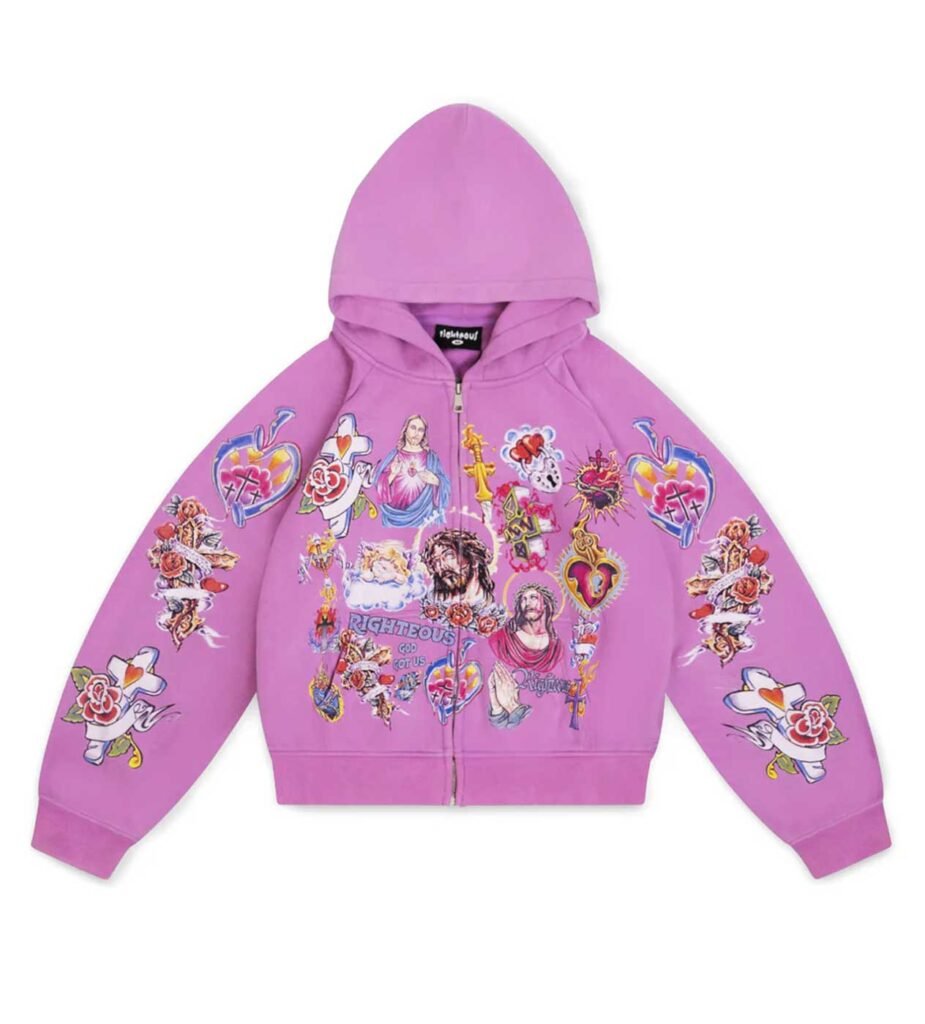
The Pink zip-up is the boldest of the four, and the one that proves tattoo style is not a monochrome idea. The Tatted Believer Zip Up in Pink keeps the same linework and the same restraint, and lets the colour do the shouting instead — it works because the drawing stays disciplined while the colour takes the risk. The Tatted Believer Sweatpants in Pink complete the set for anyone who wants the full statement.
A note for the careful reader: our catalogue currently lists the Cream zip-up twice — the second Cream listing is a duplicate of the one above, and we have flagged it for cleanup. If you are shopping the family, the cream zip-up linked in this article is the current one.
Three ways to wear it
1. The full set. Matching zip-up and sweatpants in one colour — grey on grey, cream on cream, pink on pink. This is the easiest outfit in the family and the hardest to get wrong, because the set is the outfit. Keep the shoes simple and let the matched pair carry the day. It is the move for travel days, slow Sundays, and anywhere you want to look deliberate without thinking about it.
2. Break the set. One Tatted piece, everything else quiet. The cream zip-up over dark denim, the grey sweatpants with a plain white tee and a clean jacket. Breaking the set is how a statement piece becomes a daily piece: the tattoo art becomes an accent instead of a uniform, and the outfit reads more personal for it.
3. Let one colour do the talking. Pink is the obvious candidate — one pink piece, the rest of the outfit in black, cream, or grey, and nothing else competing. But the rule works in reverse too: a grey set with one small hit of colour elsewhere (a cap, a shoe) keeps the linework as the hero. The mistake is two loud things at once. Tattoo style is a loud language spoken quietly — one voice at a time.
Caring for tattoo-style prints
A tattoo-style graphic is a print, and prints age the way you treat them. Wash cold, inside out, and skip the iron on the artwork itself. The acid wash on these pieces means each one is already slightly its own — that variation is the point, not a flaw, and a gentle wash keeps it that way. Hang dry if you can; a dryer will not destroy the print in one cycle, but it will hurry the fading along. Treat it like the flash sheet it came from: bold lines, handled with a little respect, last decades.
FAQ
Is tattoo art appropriate on Christian clothing?
That is a question of conscience, and we will not answer it for anyone else. What we can say is where the art comes from: crosses, angels, doves and scriptural banners lived in Christian art for centuries before they lived in tattoo parlours. The imagery is older than the argument about it, and plenty of believers wear it as devotion, not defiance.
What is tattoo flash?
Flash is the sheet of ready-made designs pinned on a parlour wall — bold outlines, a short palette, one clear image per design, made to be chosen in seconds and read from across the room. It is a working tradition, not a trend, and it is the reason tattoo-style graphics read so clearly on a hoodie.
Will the print fade?
These pieces are acid-washed and lightly distressed by design, so they arrive with a lived-in look already built in. That finish will soften further with wear — which is the idea. Cold wash, inside out, and the linework stays bold while the wash keeps its character.
Start with the family itself — the full Tatted Believer range lives with our hoodies — and if you want the wider story of what we make and why, our guide to We Are Righteous clothing is the place to begin, or the righteousness hoodie guide if you are choosing your first heavyweight piece.